A friend shares a headline saying that a solar eclipse will be visible in Spain, and you wonder whether a trip to Madrid will include totality. Start by locating the observing site on an authoritative path map. Country names summarize broad geography; they cannot establish the eclipse type, duration or view from your hotel, balcony or chosen park.
Separate the regional headline from your site
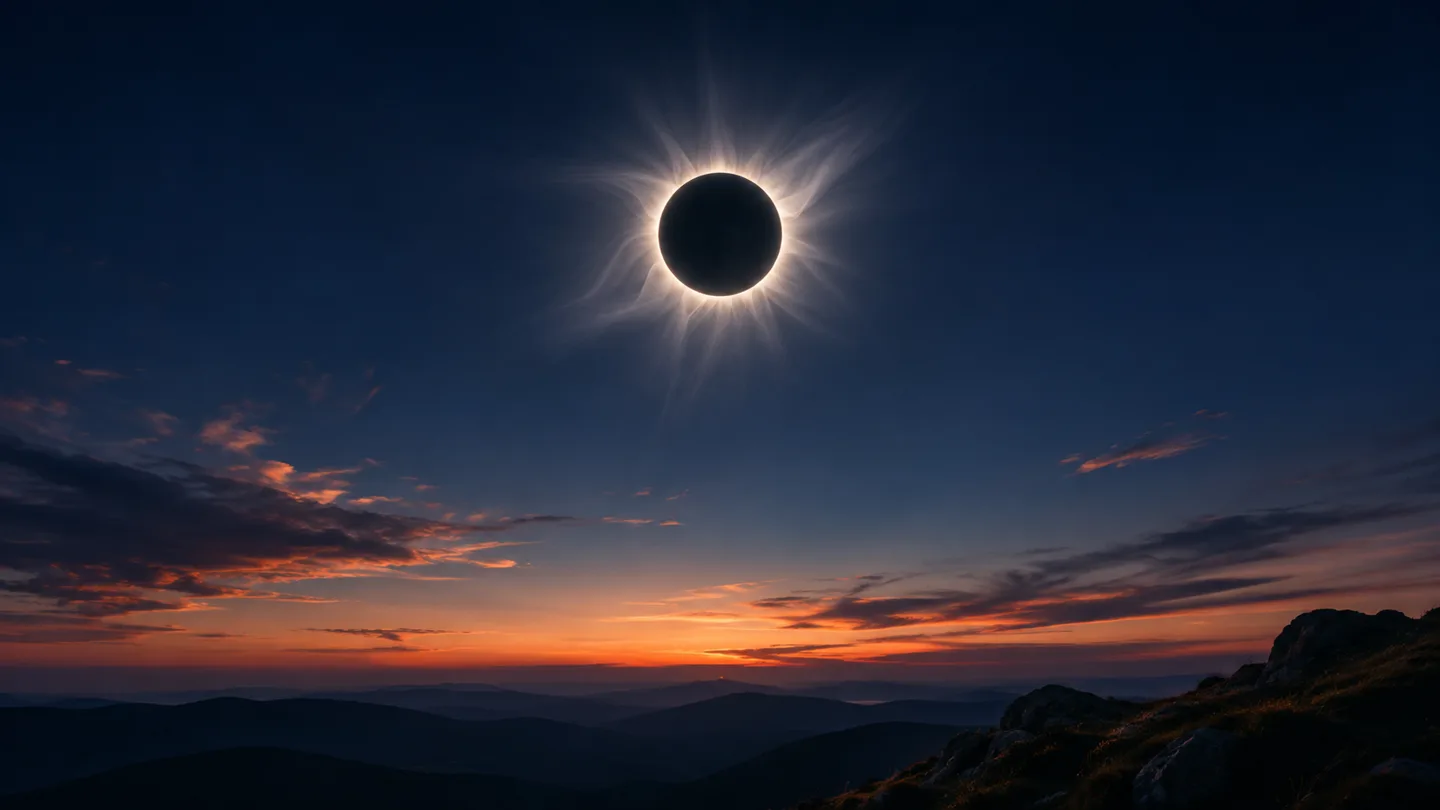
NASA's future-eclipse overview lists a total solar eclipse on August 2, 2027, with totality crossing southern Spain, North Africa and parts of the Middle East. A much wider region experiences a partial eclipse. That does not put all of Spain, or every North African city, inside the totality path.
Use an official detailed map and local circumstances for the precise place you intend to stand. NASA's Solar Eclipse Explorer explains the calculation of local circumstances and links its country-based tools. Confirm that any calculator supports the event year; a service limited to earlier eclipses cannot verify your 2027 travel plan.
Record more than the peak
Write down the start, maximum and end, plus any totality contacts where applicable. Copy each source's time basis before converting to the destination's time zone. Keep both the original and converted times so another person can check them. A phone still using your home zone can make an otherwise correct plan confusing.
In the Stars After Dusk calendar, a country's entry uses a named reference city. Eclipse calculations use that city's coordinates and a mathematical horizon. The result does not cover the entire country, a mountain ridge or a building that blocks your view. Our location explainer covers this distinction.
Before booking a viewing location, check whether its relevant horizon is open and whether you are allowed to remain for the whole event. Keep transport, accessibility, shade, water and the return journey in the plan. Check the local weather near departure and allow time to reach an alternative site if your plans permit.
Make safe viewing the default
Follow NASA's eclipse safety guidance. Direct viewing during partial or annular phases requires suitable eclipse glasses or a handheld solar viewer complying with ISO 12312-2. Ordinary sunglasses are unsuitable. Inspect viewers for damage and supervise children. Use the safe-viewer resources linked in NASA’s guidance when choosing protection.
Never look through binoculars, a telescope or a camera while wearing eclipse glasses: concentrated sunlight can damage the filter and your eyes. Such equipment needs appropriate solar filters secured at the front and knowledgeable guidance. A simple alternative is indirect projection with the Sun behind you; watch the projected image, never look through the pinhole.
Only within the totality path, while the Sun's bright face is completely covered, does NASA describe a brief exception for unaided viewing. Protection is required before and immediately after totality. Partial and annular eclipses have no such interval. If you are unsure of your circumstances or timing, retain proper protection or use indirect viewing.
Keep a record of the view
Note the actual location, local times, conditions and what you observed. If clouds hide part of the event, note when the Sun was visible. Match your photographs to their camera timestamps and keep the original files.
A dated Moon keepsake can mark the occasion, but the tool does not render eclipses or show the Sun's corona. Pair it with your written record, then use the next-event section on the home page to find another observing opportunity.