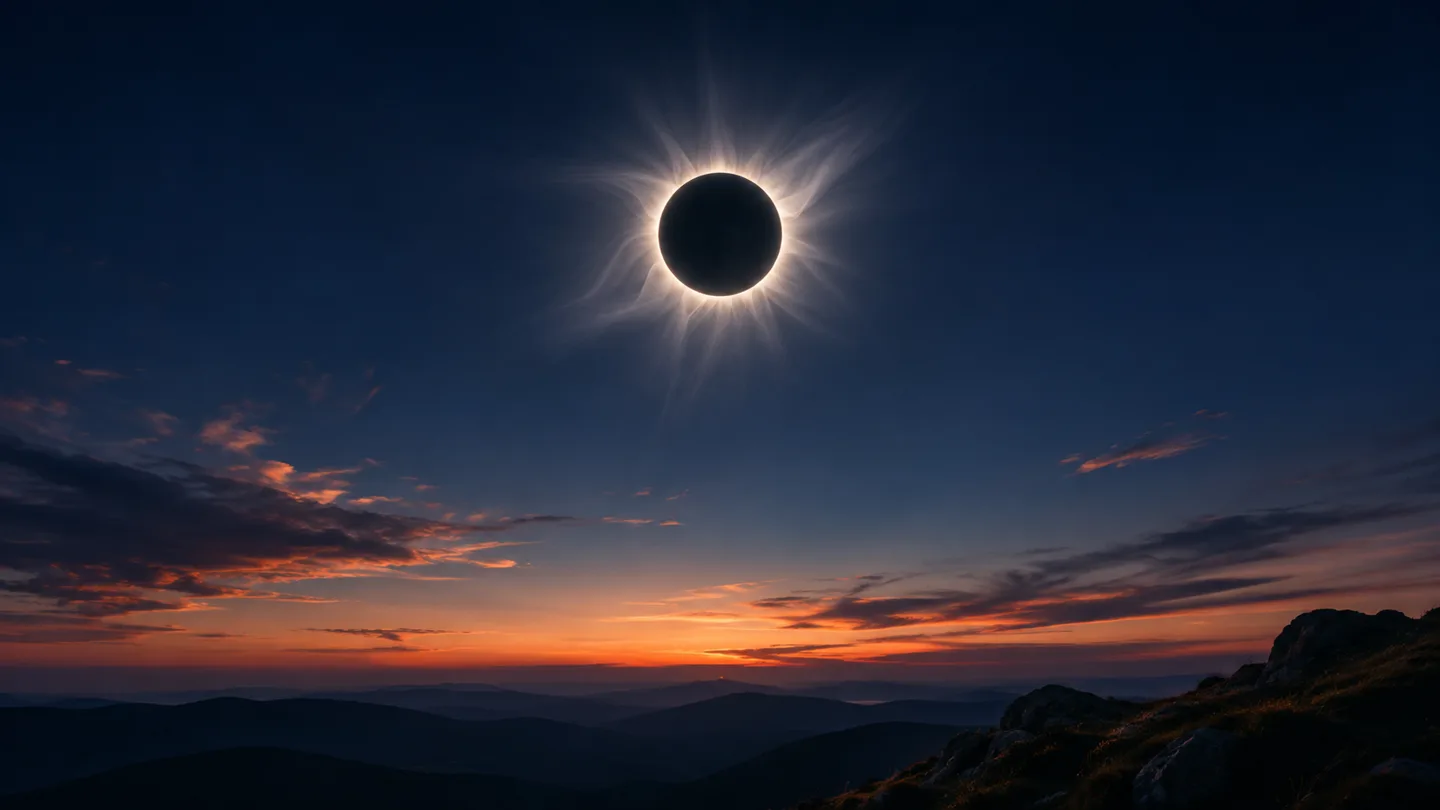
A solar eclipse is a narrow and changing geometry between the Sun, Moon and Earth. A total eclipse visible from one region can be partial somewhere else or absent at another location in the same country.
Start with a reliable overview
NASA’s eclipse overview describes dates, eclipse types and broad regions. For example, NASA lists a total solar eclipse on 2 August 2027 crossing parts of southern Spain, North Africa and the Middle East, with a wider partial-eclipse region. The overview does not mean every place in those countries sees totality.
Calculate a location
Our calendar calculates solar-eclipse circumstances at a named reference city. It reports the predicted peak in UTC when the Sun is above the mathematical horizon. Hills, buildings, weather and the observer’s actual position are not included. Consult local astronomical organisations for detailed plans.
Protect your eyes
Never look directly at the uneclipsed or partially eclipsed Sun without appropriate solar protection. NASA publishes viewing guidance for each eclipse phase. Ordinary sunglasses are not a substitute for suitable solar filters.
Compare local and UTC times
Convert the displayed UTC instant to the location’s time zone and check daylight-saving rules. A city’s computed circumstances are not transferable to an entire country.
Check the reference-city calendar