You enter a wedding date and see a slender crescent. An old phone photo from the reception shows a tilted, bright blur instead. Both can relate to the same evening, yet they answer different questions. A calculated phase describes illumination; a photograph records light reaching a particular camera. Knowing the difference helps you explain the picture in a gift caption.
What the phase calculation measures
The U.S. Naval Observatory's phase definitions separate named phases from illuminated fraction. Primary phases occur at defined Sun–Moon longitude differences. An illuminated percentage describes the sunlit share of the apparent disk; it is not the share of the whole sphere receiving sunlight.
Waxing and waning matter too: two dates can have similar percentages while the illuminated portion is increasing on one and decreasing on the other. A comparison based only on “30%” loses that distinction. Record the phase name and instant as well as the fraction when checking a result.
The Moon print maker uses Astronomy Engine for its selected instant. Its status text rounds the percentage to one decimal place. Keep the displayed UTC instant with that percentage when comparing results.
Where the surface detail comes from
NASA's CGI Moon Kit supplies lunar color and elevation maps for rendering. Our print combines NASA LROC color with LOLA elevation-derived relief and applies lighting based on the calculated phase. The date controls the lighting applied to that terrain, rather than selecting a camera exposure.
This renderer fixes the lunar near side north-up. It does not reproduce libration, the exact apparent rotation against your local horizon, Earthshine or an eclipse. Consequently, a Moon close to new may produce very little directly illuminated terrain in the print. Keep the recorded date even if your photograph shows more of the unlit side.
Why a real photo can look different
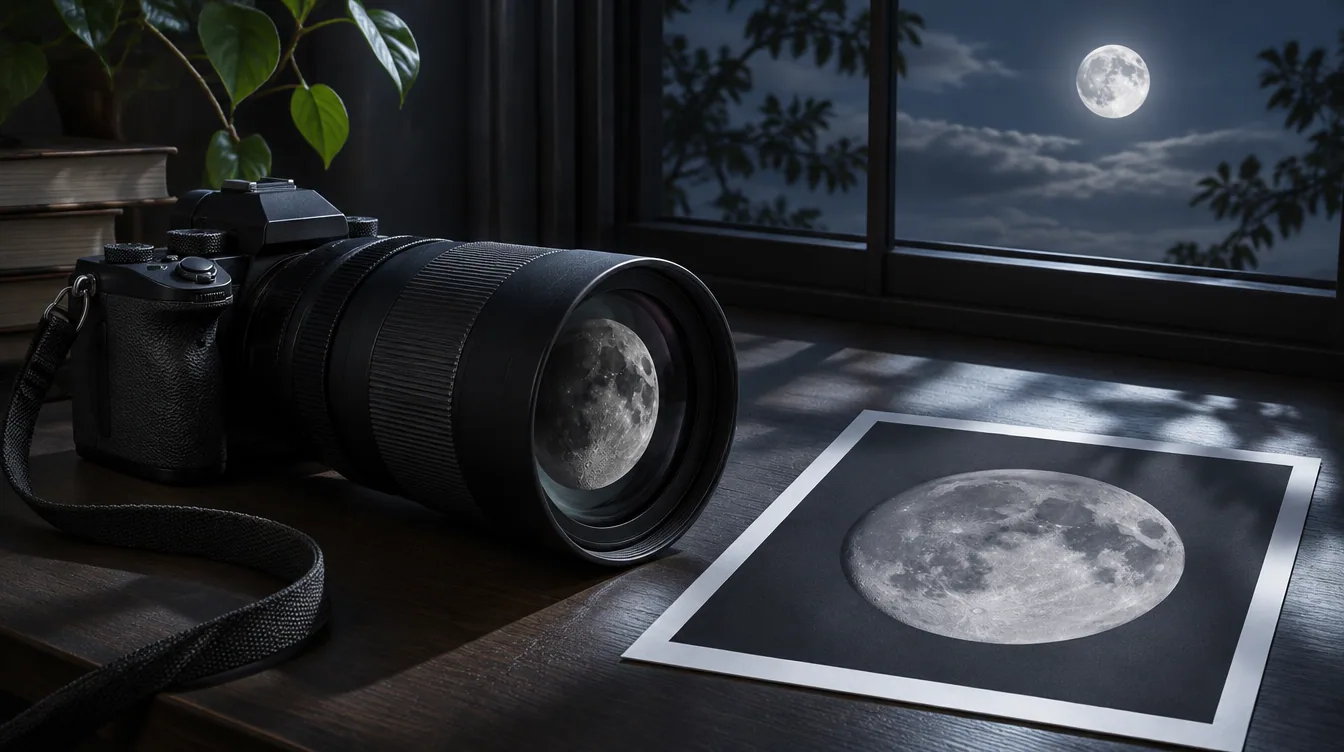
A camera adds its lens, exposure and framing to the view. A long exposure that reveals a landscape can lose detail in the much brighter Moon. NASA's lunar photography guide discusses experimenting with exposure and phases; it also explains why shadows make non-full phases interesting subjects.
First compare the original photo's timestamp with the print's selected zone and UTC status. Then check whether the photo has been rotated, cropped or made with optics that change orientation. Keep the original photograph and its timestamp so you can compare it with the rendering later.
Choose the representation that fits the memory
For “the Moon calculated for our moment,” include the date, clock time and zone in a note accompanying the gift. For “the Moon we photographed,” use a photograph you own or have permission to reproduce and retain its credit. For a NASA image, check the individual item’s credit and reuse guidance.
Our surface-markings guide helps distinguish fixed dark maria from the moving light boundary. Inspect the surface study to learn the markings without assuming its fixed lighting is tonight's phase.
To compare a rendering with a fresh observation, pick an evening through the sky calendar, then check the Moon's position and your real horizon. The home page's next-event section can suggest an occasion, while your own dated notes and photographs record what actually happened.